

Every 48 seconds, a vehicle is stolen somewhere in the United States. That’s according to the National Highway Traffic Safety Administration (NHTSA), which reported more than 650,000 vehicle thefts nationwide in 2025. For Texas agriculture workers who rely on their trucks and farm vehicles day in and day out, vehicle theft isn’t just an inconvenience; it can bring an entire operation to an untimely halt!
The good news? Vehicle theft has been trending downward. The National Insurance Crime Bureau (NICB) reported a 23% drop in thefts in 2025 compared to 2024! Still, hundreds of thousands of vehicles are stolen annually, and certain regions, including parts of Texas, continue to see above-average rates. Taking a few precautions now can make a real difference in protecting your vehicle, your equipment, and your livelihood.
Simple Daily Habits That Deter Thieves
Most vehicle thefts aren’t sophisticated, planned operations. Many are opportunistic: a thief spots an unlocked door or a running engine and acts in seconds. These everyday habits cost nothing, but they significantly reduce your risk.
Always take your keys! Even if you’re just running inside for a minute. Vehicles left running and unattended are practically an open invitation. This is especially relevant when you’re warming up a truck on a cold Texas morning before heading out to the field.
Lock your doors and roll up your windows. Some thieves walk through parking lots simply testing door handles. Make sure every window is closed, and every door is locked before you walk away every single time.
Park in well-lit areas. Visibility deters thieves. Whether you’re at a feed store, a co-op, or a shopping center, opt for a well-lit spot close to foot traffic whenever possible.
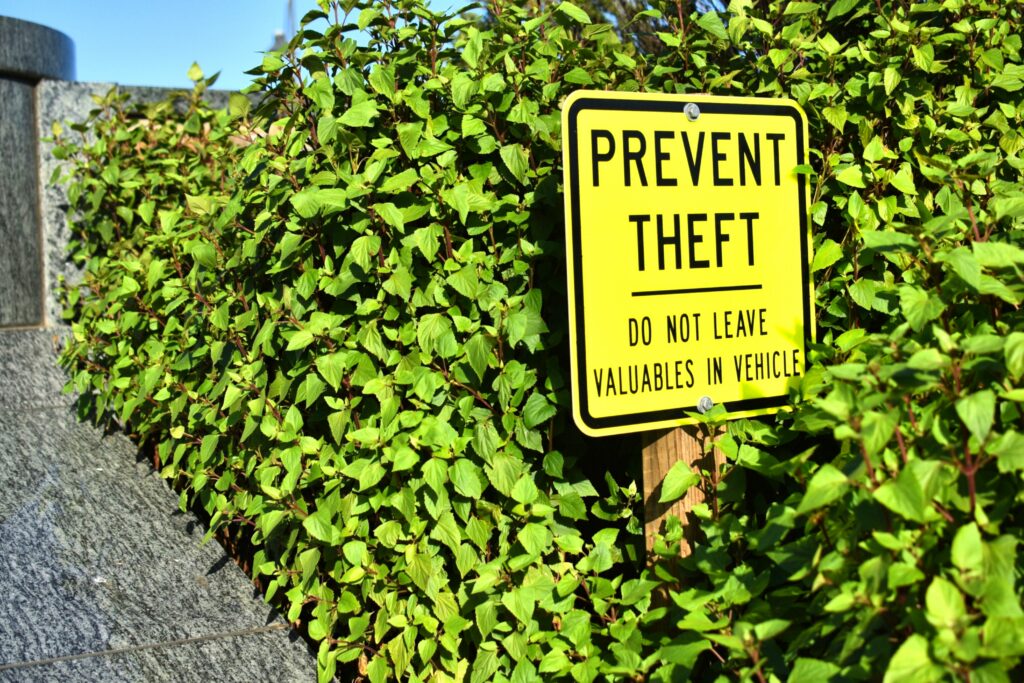
Never leave valuables in plain sight. The NHTSA lists GPS units, cell phones, laptops, and purses among the most commonly stolen items from vehicles. If it’s visible through the window, it’s a target. Lock valuables in the glove compartment, store them in the cab, or take them with you!
Add Layers of Protection With Anti-Theft Devices
Good habits are a strong foundation, but physical and electronic deterrents add an important extra layer of security. The NICB recommends a “layered approach”: the more barriers between a thief and your vehicle, the less appealing it becomes as a target.
Steering wheel locks. A visible steering wheel lock signals that your vehicle will take extra time and effort to steal. Most opportunistic thieves will move on to an easier target.
Audible alarms. A horn alarm or aftermarket alarm system draws attention to unauthorized entry attempts. That sudden noise is often enough to send a thief running.
Immobilizing devices. These prevent thieves from bypassing your ignition system and hot-wiring your vehicle. Some work through computer chips embedded in your ignition key; others cut off the electrical or fuel supply to the engine. These are particularly useful for older truck models, which are stolen more frequently because thieves are more familiar with their ignition systems.
GPS tracking systems. Aftermarket GPS trackers—including devices like Apple AirTags—allow you to monitor your vehicle’s location in real time. If your truck or farm vehicle is stolen, law enforcement can use this information to recover it quickly. Reporting a stolen vehicle immediately increases your chance of recovery within the first 24 hours by 34%, according to the NICB.
Know Which Vehicles Are Most at Risk
Some vehicles are targeted far more often than others. According to 2024 NICB data, the most stolen vehicles in the U.S. include:
-
- Hyundai Elantra
-
- Hyundai Sonata
-
- Chevrolet Silverado
-
- Honda Accord
-
- Kia Optima
- Ford F-150 Series Pickup
For Texas agriculture workers who drive Chevy Silverados or Ford F-150s, this is worth paying attention to. These trucks are popular targets not only because of their widespread use, but because of the high resale value of their parts.
Don’t Overlook Catalytic Converters and License Plates
Vehicle theft goes beyond someone driving off in your truck. Catalytic converter theft surged by 288% from 2020 to 2022, according to the NICB. These components contain the precious metals platinum, palladium, and rhodium that can be sold quickly for significant sums. The replacement cost, however, can run into the thousands!
License plates and truck tailgates are also commonly stolen. Consider anti-theft license plate screws to make removal harder, and be mindful of where you park your truck overnight.
Some auto parts stores and dealerships offer catalytic converter etching services, which mark your converter with your VIN, making it harder to sell and easier to trace. It’s a small investment that can save a significant headache later.
What to Do If Your Vehicle Is Stolen
Acting fast matters. Here’s what to do if you discover your vehicle is missing:
-
- File a police report immediately. You’ll need your vehicle’s make, model, color, license plate number, and Vehicle Identification Number (VIN). Keep this information written down somewhere accessible, not just stored in the vehicle itself.
- Notify your insurance company within 24 hours. You’ll need the police report number to file a claim.
- If you locate your vehicle before authorities do, contact both the police and your insurer right away. Don’t attempt to recover it on your own.
Make Sure Your Coverage Has You Protected
Here’s something many drivers overlook: standard auto liability coverage does not cover vehicle theft. To be protected if your car or truck is stolen, you need comprehensive coverage.
Comprehensive coverage applies to losses caused by events other than collisions, including theft, weather damage, and vandalism. If your vehicle is stolen, comprehensive coverage can help reimburse you for your vehicle’s actual market value.
A few important things to keep in mind:
-
- Personal items stolen from your vehicle, like a laptop or cell phone, are generally not covered under comprehensive auto insurance. Those losses typically fall under homeowners or renters insurance.
- Aftermarket or custom parts may also require separate coverage, as standard comprehensive policies typically only apply to pre-installed, factory components.
If you’re unsure whether your current policy includes comprehensive coverage, now is a good time to review your policy documents or reach out to your insurance provider. For agriculture workers with farm-use trucks or multiple vehicles on the property, it’s worth confirming that each one has the right level of protection.
Keep Your Vehicle and Your Work Secure
Your truck is more than just a way to get from point A to point B. For Texas agriculture workers, it’s a tool, a workhorse, and often an essential part of running a farm or ranch. A few smart habits and the right equipment can go a long way toward keeping it safe.
Lock up, layer your protection, and make sure your insurance coverage reflects the value of what you’re protecting. If you have questions about your policy or want to explore your coverage options, check with your insurance carrier. You can also call us at (800) 772-7424 or visit agworkers.com to request an auto insurance quote through Ag Workers!
For more content like this, please visit our blog.